

Spectroscopy Solutions for
Semiconductor Manufacturing (OES)
Semiconductor processes demand repeatable, real-time insight. Optical Emission Spectroscopy enables precise monitoring designed for uptime, consistency, and scale without disrupting existing tools.
Contact Our Local Distributors
LABGUIDE CO., LTD.
3 F., No. 37, Ln. 232, Huaxin St.,
Zhonghe Dist., New Taipei City, 23569,
Taiwan (R.O.C.)
Telephone: +886-2-29406162
Email: [email protected]
Unice E-O Services Inc.
No 5, Andong Rd., Chungli District,
Taoyuan City 320023,
Taiwan (R.O.C.)
Telephone: +886-3-462-6569
Email: [email protected]

The Challenges in
Semiconductor
Manufacturing
See How Spectroscopy Helps
Unplanned downtime and yield loss during plasma processes
Inconsistent process repeatability across etch and deposition steps
Difficulty detecting endpoint or plasma drift in real time
Tight integration requirements inside existing process tools
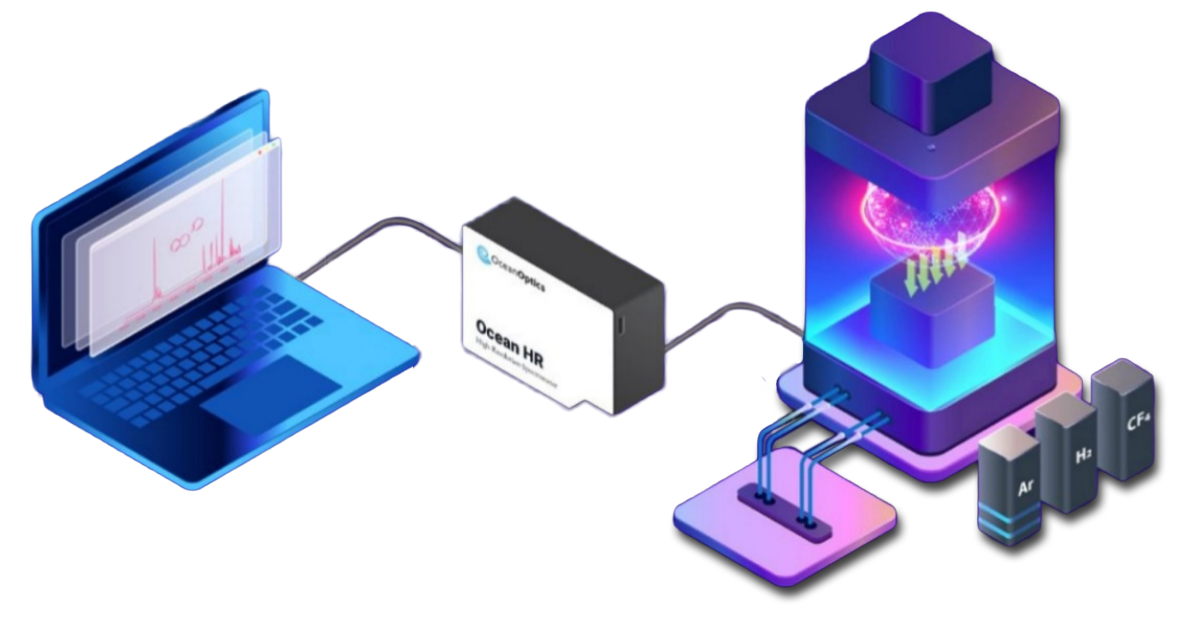
How Optical Emission Spectroscopy (OES) Improves Semiconductor Processes
End Point Detection (OES)
What You Measure:
Real‑time plasma emission spectra during etching or deposition.
What You Learn:
Clear spectral signals that indicate process completion.
Why It Matters:
Reduces over processing, improves cycle consistency, and lowers process risk.
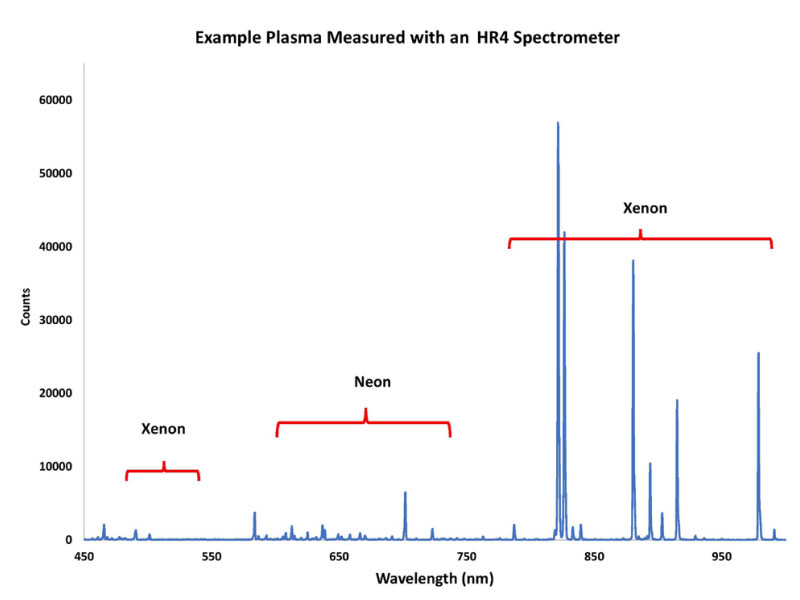
Process Control (OES)
What You Measure:
Continuous changes in plasma emission behavior.
What You Learn:
Process drift, instability, or variation as it occurs.
Why It Matters:
Supports tighter process control without disrupting existing tool architectures.
Why Ocean Optics
Closed systems force you to adapt your process around the instrument. Ocean Optics takes the opposite approach. Our spectroscopy solutions are designed to fit into your tool architecture, your control environment, and your performance targets.
- Flexible by design – Configure wavelength range, resolution, optics, and accessories around your specific process signals.
- Built for integration – Compact, modular components designed for OEM integration and existing tool environments.
- Open-platform control – Use OceanDirect™ SDK for full software and automation control.
- Scale without re-platforming – Move from R&D to production using the same ecosystem. No need to redesign your sensing approach.
- Cost aligned to the application – Build exactly what you need, without paying for fixed-system limitations or unnecessary complexity.
Deployed Across Global Semiconductor Ecosystems
Closed systems force you to adapt your process around the instrument. Ocean Optics takes the opposite approach. Our spectroscopy solutions are designed to fit into your tool architecture, your control environment, and your performance targets.
Delivered into a global process control OEM, embedding high-resolution spectroscopy into overlay metrology systems.
Integrated directly into semiconductor process control equipment
Recommended Spectroscopy Bundles
Each bundle is designed for reliable OES integration in semiconductor manufacturing environments.
Endpoint Detection (OES)
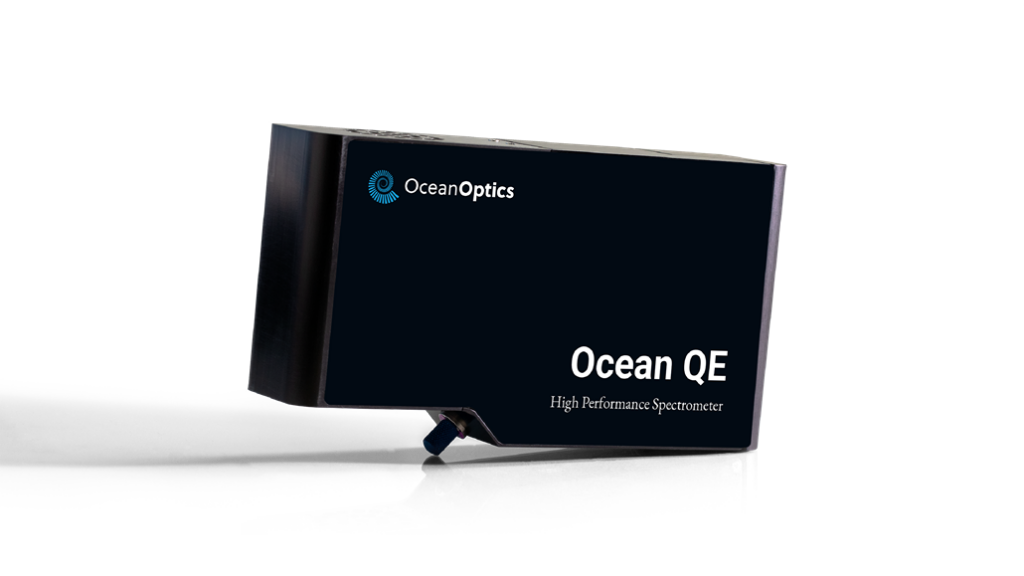
Spectrometer:
QEPro-UV250-25
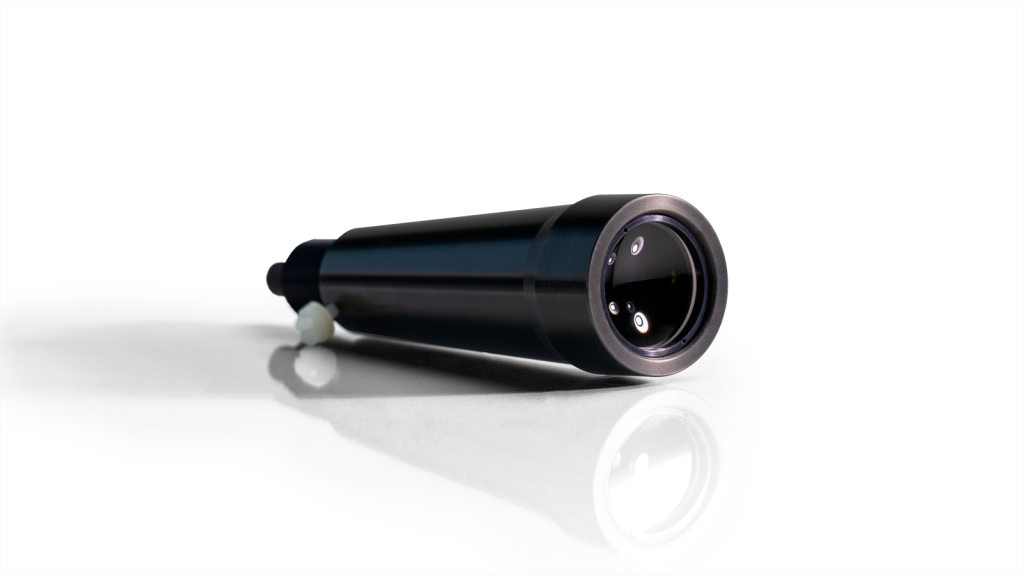
Collimating Lens:
84-UV-25
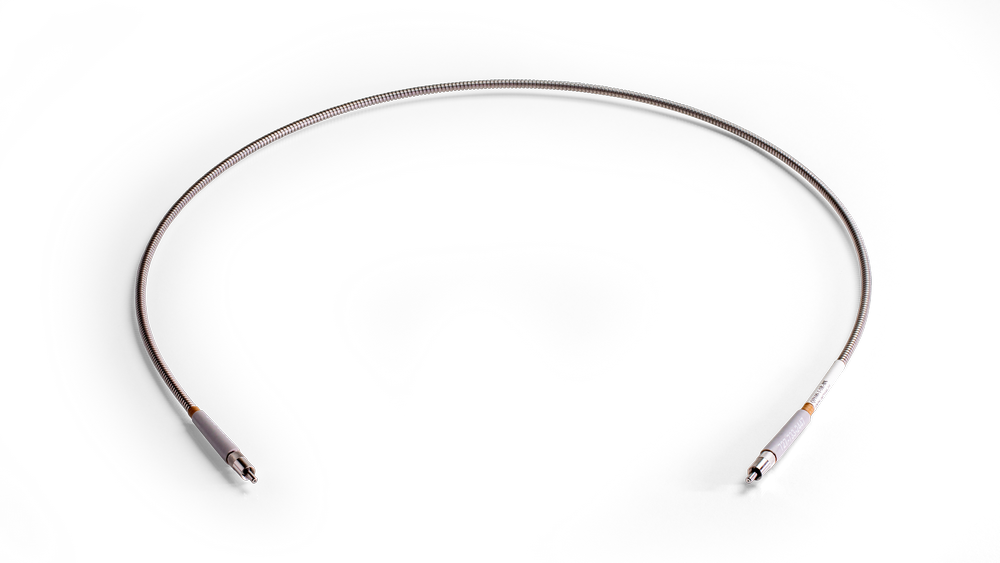
Fiber:
QP600-1-SR-BX (Solarization Resistant)
High sensitivity over UV range enables detection of weak endpoint signals and improves process consistency.
Why this bundle
Optimized for detecting subtle spectral changes at process endpoints, especially in low-signal or unstable plasma conditions.
Key parameters
- Wavelength range: 200 – 790 nm
- Optical resolution: ~1.5 nm
- Signal performance: High sensitivity, high dynamic range, high SNR
- Integration range: ms to minutes
- Fiber: 600 µm core, UV solarization-resistant, stainless-steel armored
- Optics: UV-grade fused silica, long working distance coupling
Why QEPro Spectrometer
QE Pro is optimized for weak or variable endpoint signals, combining strong UV sensitivity, high dynamic range, and high SNR to reliably detect subtle spectral changes from R&D through 24/7 production.
Why Complementing Components
- Lens: Supports efficient free-space collection and flexible tool positioning
- Fiber: Maintains signal integrity in UV-rich plasma environments while adding mechanical durability
Process Control (OES)
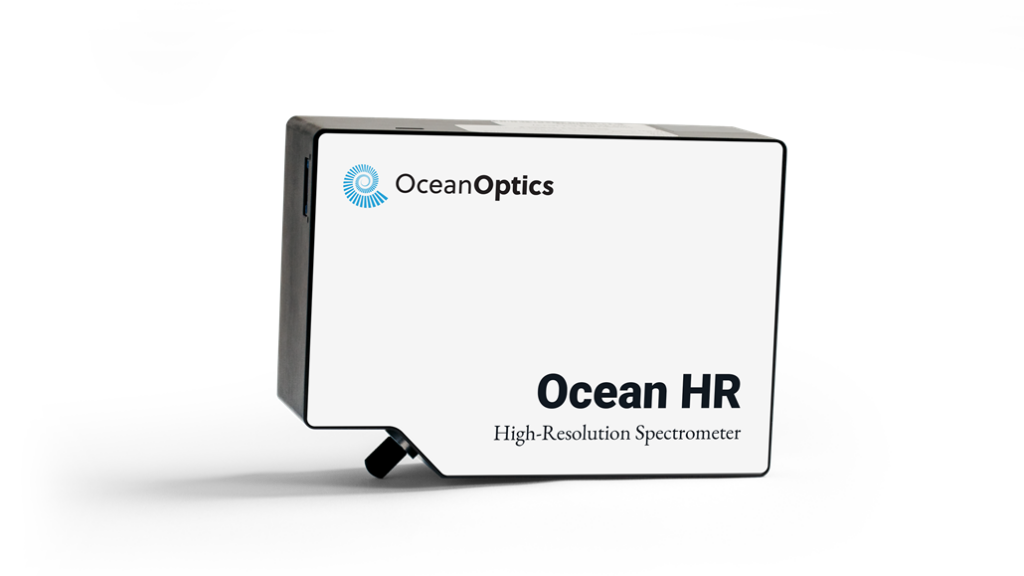
Spectrometer:
HR-4UVV250-25
Collimating Lens:
84-UV-25
Fiber:
QP600-1-SR-BX (Solarization Resistant)
High resolution distinguishes adjacent spectral lines for precise monitoring of plasma variation and process drift.
Why this bundle
Designed for continuous monitoring and fine spectral discrimination in stable, high-throughput production environments.
Key parameters
- Wavelength range: ~190 – 880 nm
- Optical resolution: <1 nm
- Focus: Spectral separation and measurement stability
- Integration range: ms to seconds
- Fiber: 600 µm UV solarization-resistant, armored
- Optics: UV fused silica, stable optical coupling
Why HR-4 Spectrometer
HR-4 is ideal for process control, delivering higher resolution and thermal stability to distinguish adjacent emission lines and track subtle spectral shifts over time.
Why Complementing Components
- Lens: Enables consistent and flexible light collection in tool environments
- Fiber: Supports long-term durability under continuous operation
Choosing the Right Spectroscopy System

Selecting the ideal spectroscopy system requires balancing precision with practical integration.
To find the solution that best fits your specific application, consider how these critical technical factors align with your operational goals.
What plasma signals are critical to your process?
Which wavelength range is required for reliable emission monitoring?
How will OES integrate into your existing tool architecture or control flow?