
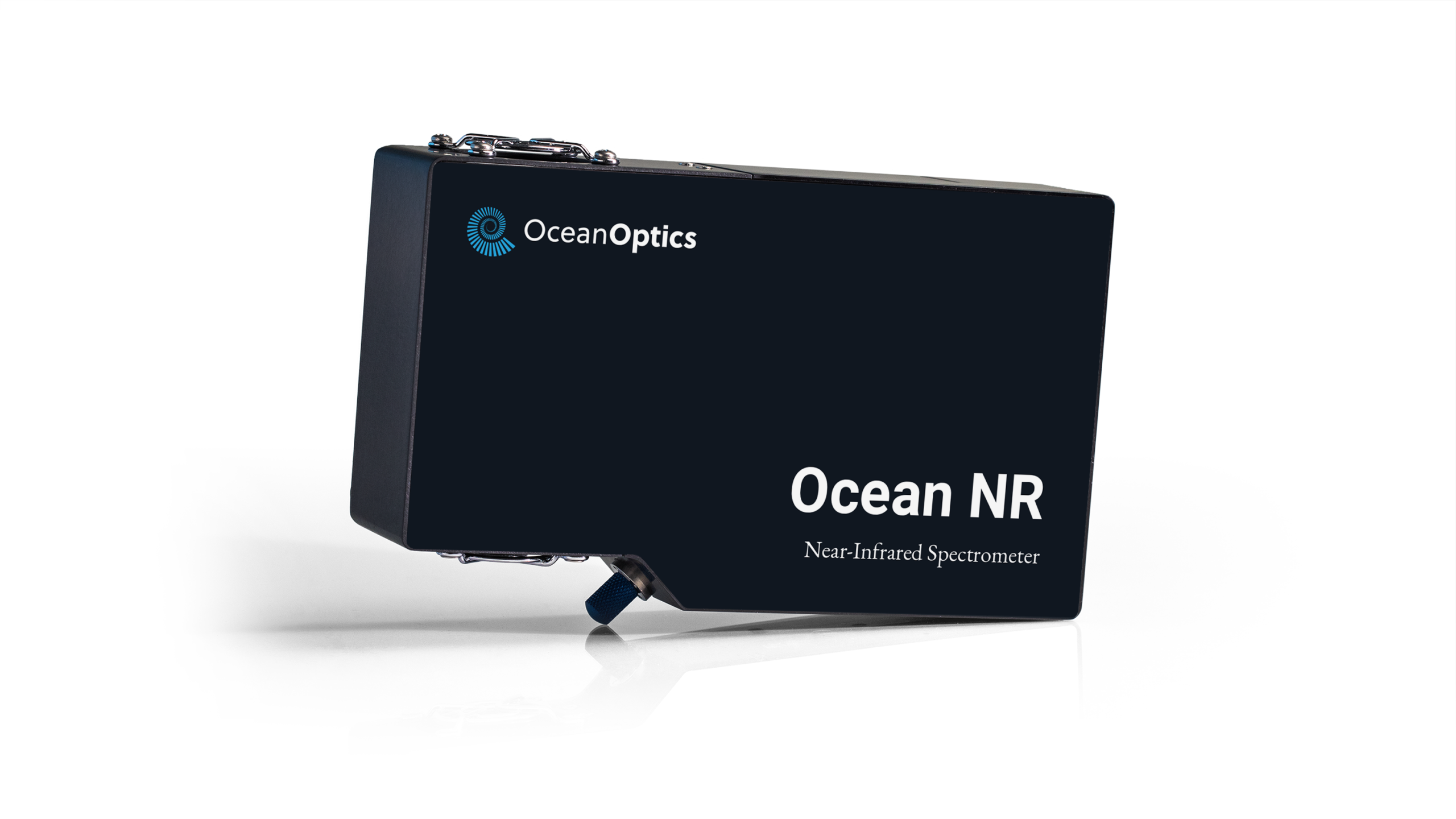
Raman spectroscopy is one of the most versatile tools in modern materials analysis. By studying how light interacts with molecules, scientists can see a material’s unique “fingerprint.” This marker reveals a material’s composition, structure, contamination and stressors. It’s largely nondestructive and accurate, making it perfect for analyzing dozens of materials.
As global markets expand and become more competitive, researchers and engineers need precise, efficient solutions to keep up. Raman spectroscopy is essential for providing safer, smarter data that powers scientific advancements.
What Is Raman Spectroscopy?
Raman spectroscopy is a light-scattering technique that examines how photons interact with molecules. When a laser illuminates a sample, most of the light scatters normally, but some light shifts in energy as it interacts with the sample’s molecular vibrations. The energy change is the Raman effect. It creates a distinctive pattern that is consistent for different chemical bonds and structures. Each molecule scatters light uniquely, creating a “fingerprint” for each material. Researchers can combine this fingerprint with infrared spectroscopy to understand material properties and molecular composition.
What Does Raman Spectroscopy Measure?
Raman spectroscopy measures the tiny energy shifts that occur when light interacts with the vibrational modes of molecules. These shifts are unique to each material. That shift in information becomes the chemical fingerprint for each material. More specifically, Raman spectroscopy measures:
- Molecular structure: What are the specific functional groups and bond types?
- Chemical composition: What substances are present and in what amounts?
- Material properties: Is there any stress, damage, polymorphism or crystallinity?
Raman spectroscopy reveals a material’s structural and compositional information without damaging it. It’s ideal for research and manufacturing, since it protects the material being analyzed.
The Principles of Raman Spectroscopy
Raman spectroscopy is about how light interacts with matter. Researchers use a monochromatic light — light with a single wavelength or frequency — to strike a sample. The light hits the sample, causing photons to scatter with no change in energy, which is called Rayleigh scattering. The result is Raman scattering when they scatter inelastically and exchange energy with the bonds inside the sample’s molecules.
All the principles of Raman spectroscopy use this scattering as their foundation.
The Raman Effect Explained
Light is made of photons — little energy packets moving at the speed of light. As they travel from the light source, they bounce off objects in their path. During Raman scattering, an incoming photon interacts with a molecule and distorts its electron cloud momentarily. This interaction alters the scattered photon’s energy, raising or lowering it based on how the molecule’s vibrational energy reacts.
The energy shift corresponds to specific molecular vibrations. Every chemical bond vibrates at unique frequencies, so the scattered photon energy is different for every material. Scientists track this spectral signature and use it to identify the sample’s molecular structure and composition.
Stokes and Anti-Stokes Scattering
Elastic scattering occurs when photons scatter with no change in energy, while inelastic scattering occurs when they show changes in energy. Raman scattering is a type of inelastic scattering with two subtypes: Stokes and anti-Stokes.
In Stokes scattering, the molecule absorbs some of the photon’s energy and the scattered light returns at a lower frequency. In anti-Stokes scattering, the molecule loses energy and produces scattered light at a higher frequency.
The intensity ratio is proportional to the Boltzmann factor, making anti-Stokes weaker at room temperature. Stokes lines are more intense at room temperature, which makes them easier to measure. All these frequency variations form the Raman shift, which is the metric used to study how photons exchange energy with molecules.
Polarizability and Selection Rules
Vibrations appear in a Raman spectrum when they cause a change in a molecule’s polarizability. Polarizability is how easily the laser light can distort the electron cloud. Atoms in a molecule are always vibrating. If these vibrations change the polarizability — the electron cloud shape — when hit by the laser, that molecule is “Raman active.” Raman-active vibrational modes can produce readings for Raman spectroscopy.
How Does Raman Spectroscopy Work?
Raman spectroscopy shines a light beam onto a material and studies how that light scatters back. Most of the light scatters as Rayleigh scattering, carrying the same wavelength as the original beam. A small portion scatters inelastically, undergoing the Raman effect and scattering differently based on the molecule it interacts with. Being able to read this scatter information is how you measure Raman effects.
As mentioned, researchers point a laser at a sample to read the Raman effect data that scatters. As the scattered light leaves the material, optical filters remove the Rayleigh scattering information. The filtered light is the Raman data. It passes through a diffraction grating onto a detector like a Charge-Coupled Device (CCD) array. The detector records the intensity and wavelength of each scattered photon for Raman analysis.
The Raman Spectrum
The detector’s output forms a Raman spectrum. It’s a plot of light intensity versus frequency shift relative to the original laser source. Each peak represents a distinct vibrational mode of the molecules in a sample. This peak map is the chemical fingerprint of that material. Analysts can compare this fingerprint to spectral databases to identify compounds, check material purity or detect structural changes.
Common Raman Spectroscopy Instrumentation
Every Raman measurement relies on precise, consistent instruments to capture the smallest changes in scattered light. A typical Raman instrumentation setup includes:
- Laser source.
- Sample interface.
- Optical filters.
- Spectrograph.
- Detector.
- Software for data acquisition and analysis.
The laser is often monochromatic with a stable wavelength. It provides the light that interacts with the sample. The sample interface delivers the laser to the correct region. Then, filters block Rayleigh scattering so the Raman-scattered light reaches the spectrograph. The spectrograph disperses the light into its component wavelengths.
Types of Raman Systems
All Raman spectroscopy instruments convert light interactions into data, but they have different applications:
- Benchtop systems: Large laboratory setups with high spectral resolution and environmental control.
- Compact and field-ready: Smaller devices are used for on-site analysis, like raw material verification or environmental monitoring.
- Raman microscope: Raman microscopes integrate the spectrometer with an optical microscope. Users can capture spectra while visualizing their microscopic structures.
- Modular systems: Modular systems let engineers and researchers integrate Raman modules into existing optical setups or process lines.
- Handheld units: These take modular flexibility and combine it with field readings. Users can take Raman readings for security, manufacturing or environmental testing applications.
- Integrated systems: Raman systems are also combined with other optical techniques like fluorescence or infrared spectroscopy for better material insights.
Raman Spectroscopy Applications in Different Industries
Raman spectroscopy is highly versatile, supporting applications from medical research to industrial quality control by revealing material composition and structure. Any industry that needs to examine material quality and features without damaging the sample can use Raman spectroscopy to reveal tiny details. Light scattering supports engineers, scientists and manufacturers every day.
Biomedical Research
The life sciences use Raman analysis to study biological tissues, cells and biomolecules. It can identify chemical changes associated with disease and monitor drug distribution. Raman methods can even verify pharmaceutical formulations without affecting the sample. Researchers use Raman technology to distinguish healthy and cancerous cells based on their spectral signatures.
Industrial and Process Monitoring
Manufacturing operations depend on tight quality control to protect profit margins and reduce waste. Raman spectroscopy can verify material composition, uniformity and stresses in manufacturing products. Organizations use it to find defects in crystal structures or contaminants that affect performance. Raman technology is useful in gemstone analysis and authentication processes. In-line sensors are integrated into the assembly line so businesses can continuously monitor quality.
Environmental Science
Raman spectroscopy is essential in lab analysis and remote sensing. Portable instruments can measure fuel quality and identify pollutants. Meanwhile, remote-sensing Raman lidar systems use laser pulses to profile atmospheric gases. Researchers can detect trace compounds in complex mixtures and quickly collect environmental data.
Food and Agriculture
Raman technology’s detailed analysis supports food and agriculture quality, as well. If there are pesticide traces or composition concerns, Raman spectroscopy can often detect them using SERS substrates or multivariate models. It even supports produce sorting. Raman spectroscopy differentiates between ripe and contaminated food without harming the sample.
Arts and Forensics
Researchers also deploy Raman spectroscopy in archaeological and forensic applications. Since it’s nondestructive, it’s ideal for working with delicate samples. Curators can identify pigments, binders and restoration materials in artwork without removing samples. Archaeologists analyze mineral compositions on artifacts to trace their origins.
In forensics, Raman spectroscopy provides rapid identification of various materials. Analysts can identify narcotics or powders with minimal handling. This technology makes it easier to build cases and ensures accurate evidence identification.
Raman Spectroscopy Advantages and Limitations
Raman spectroscopy is a central part of analytic science thanks to its data access and careful operation. Analysts can easily capture a material’s chemical fingerprint without more intensive, damaging means.
Researchers prefer Raman spectroscopy because it’s:
- Nondestructive: Raman spectroscopy relies on scattered light, so samples can remain intact during testing, ideally requiring no coatings, solvents or physical contact at all.
- Fast: Users can easily collect high-quality spectra in seconds. Light moves quickly, and Raman instruments work fast to let users verify materials or control processes more accurately.
- Versatile: Raman methods are also versatile. Use Raman spectroscopy on solids, liquids, gases and samples inside glass. Visible and near-infrared light passes easily through transparent materials.
- Portable: Raman spectroscopy tools are available in handheld and fiber-optic systems to expand capability in the field or on the production floor.
- Precise: Raman spectroscopy provides high chemical specificity. Since each peak corresponds to a vibrational mode, researchers can precisely identify compounds, quantify mixtures, and detect impurities.
While powerful, Raman analysis is limited by the Raman scattering sample size and fluorescence. Far fewer photons undergo Raman scattering than Rayleigh scattering, which means signals can be weak and sensitive to background noise. Increasing laser power can help, but it risks heating and damaging sensitive samples. Fluorescence is also a challenge. Some materials emit background light, which overwhelms the Raman signal. Scientists use longer-wavelength lasers and near-infrared excitation to counter this.
Advanced Raman Techniques for Better Results
Raman spectroscopy is still evolving. Overcoming weak signal strength and fluorescence interference requires advanced technology. These innovations improve sensitivity and spatial resolution, expanding optical analysis.
Surface-Enhanced Raman Spectroscopy
Surface-enhanced Raman spectroscopy (SERS) addresses a major limitation: faint signals. Researchers place a sample on a roughened metal surface made from silver, gold or copper. SERS amplifies the electromagnetic field near the surface and boosts the Raman signal. Scientists can detect trace levels of analytes. SERS makes finding extremely low concentrations easier and more accurate.
Resonance Raman Spectroscopy
In resonance Raman spectroscopy, the excitation laser is tuned to match an electronic transition in the molecule. When this resonance condition is met, certain Raman bands’ intensity increases. This technique enhances the visibility of specific molecular groups. It’s ideal for studying biological molecules and pigments.
Tip-Enhanced and Coherent Techniques
Researchers use tip-enhanced Raman spectroscopy (TERS) for nanoscale imaging. TERS involves a metal-coated atomic tip that concentrates the laser field at its apex. This achieves spatial resolution beyond the diffraction limit, delivering nanoscale chemical imaging.
Other methods, like coherent anti-Stokes Raman scattering (CARS) and stimulated Raman scattering (SRS), use multiple synchronized lasers to generate strong signals. These techniques make mapping live cells or tissues fast and high-contrast.
FT-Raman and Portable Systems
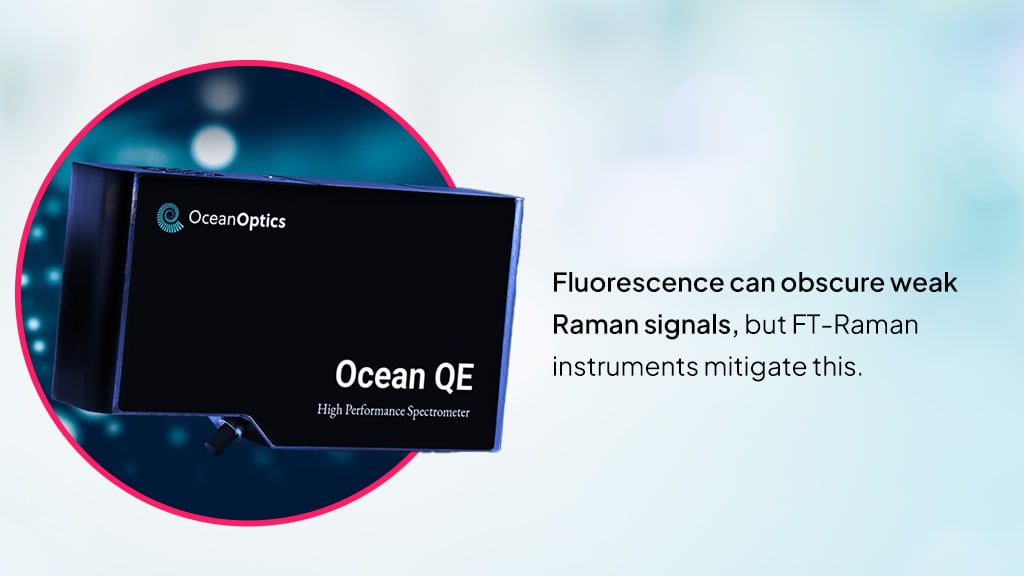
Fluorescence can obscure weak Raman signals, but FT-Raman instruments mitigate this. They use near-infrared lasers to excite samples. The lasers’ lower energy light minimizes fluorescence for cleaner spectra. New systems combine this technology with fiber-coupled systems to make in-field measurements fast and accurate.
Expanded Compatibility
Modern systems are now designed with more flexibility. Increased connectivity capabilities have let Raman systems integrate with multiple platforms. Instruments are built to interface with original equipment manufacturers (OEMs) and research configurations. High-performance systems make spectroscopy more collaborative and adaptable.
Why Trust Ocean Optics?
For more than 30 years, Ocean Optics has helped scientists, engineers and manufacturers push the boundaries of discovery. We’ve continuously refined how optical systems capture, interpret and apply spectral data. Ocean Optics’ strength lies in our precise technology and commitment to industry collaboration.
We partner with researchers and OEMs worldwide to create practical optical solutions. Our expertise in Applied Spectral Knowledge empowers your team to achieve more. Ocean Optics operates under ISO 9001:2015 in our U.S. and European facilities. We maintain ISO/IEC 17025 accreditation for laboratory competence and ISO 13485:2016 certification for medical‑grade instrumentation. Additionally, our REACH and RoHS declarations demonstrate our commitment to environmentally responsible design. Trust Ocean Optics for high-quality, tested and traceable equipment and support.
Unlock New Discoveries With Ocean Optics

Through Raman spectroscopy, light reveals the structure and behavior of essential materials. At Ocean Optics, we help you harness that power to transform photons into understanding. Explore our full line of Raman spectrometers and invest in equipment that delivers precise, repeatable results. Let Ocean Optics help you measure confidently and unlock your next discovery.