
How a Marine Science Challenge Sparked a Revolution in Spectroscopy
What began as a quest to better understand our oceans took spectroscopy from the laboratory to the field, factory, and beyond.
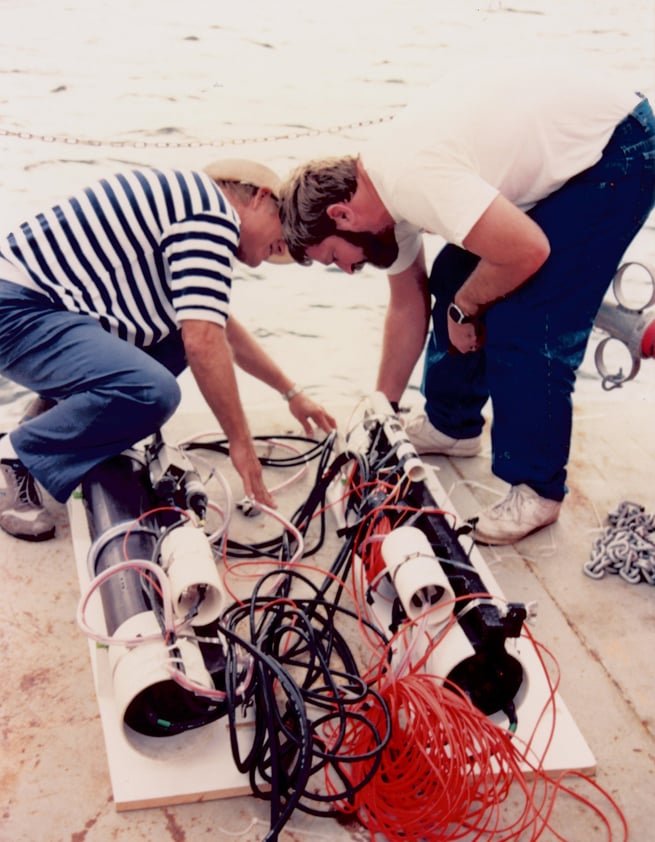
More than three decades ago, a simple scientific challenge set the stage for a revolution in spectroscopy.
At the time, oceanographer Mike Morris was focused on understanding and protecting marine environments. Researchers studying seawater chemistry needed reliable ways to measure pH and other parameters in the field, but the instrumentation available was large, expensive, and designed for laboratory use. There had to be a better way.
That belief would ultimately lead to the founding of Ocean Optics.
The story continues
Honoring the Journey
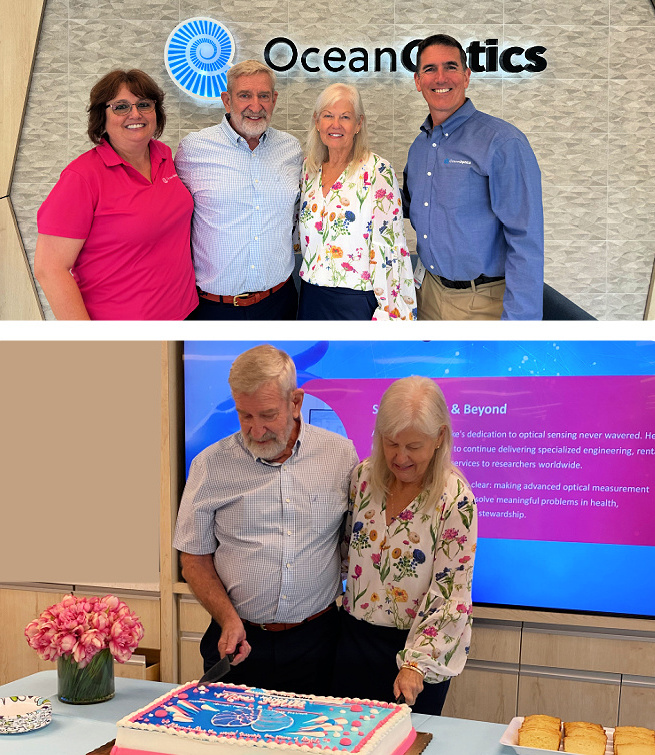
More than three decades after founding Ocean Optics, Mike Morris returned to share stories from the company’s earliest days. Explore highlights from his visit and revisit key milestones in the history of Ocean Optics.
A Passion for Science and Problem Solving
Mike’s background in marine science gave him a firsthand understanding of the challenges researchers faced. Scientific discovery often depended not only on asking the right questions, but on having the right tools to answer them. Yet many of those tools were difficult to access outside traditional laboratory settings.
Driven by curiosity and a desire to solve world problems, Mike began exploring ways to make measurement technologies more practical, portable, and accessible.
In 1988, he borrowed $10,000 to launch a small company called pHish Doctor, developing sensors for aquarium and aquaculture applications. What started as a modest entrepreneurial venture would soon evolve into something much larger.
The Challenge That Changed Everything
While collaborating with marine researchers on a Department of Energy Small Business Innovation Research (SBIR) project, Mike and his colleagues encountered a major obstacle.
They needed an optical instrument capable of measuring seawater chemistry in challenging environments. Existing spectrometers were too large and impractical for field deployment. Rather than accept the limitations of existing technology, they decided to create a new solution.
That decision became the foundation of Ocean Optics.
Founded in 1989, Ocean Optics was built on the idea that scientific instruments could be smaller, more flexible, and easier to use without sacrificing performance.
Bringing Spectroscopy Out of the Lab
At the time, spectroscopy was largely confined to research labs and specialized facilities. Instruments were bulky, expensive, and difficult to integrate into field applications.
Mike and his team envisioned something different.
By combining fiber optics with compact optical designs and emerging detector technologies, they helped create a new category of instrumentation: the miniature spectrometer. Their work would lead to the introduction of the S1000, helping transform the way spectroscopy could be used across research, industry, education, and manufacturing.
For the first time, spectroscopy could move beyond traditional laboratory walls and into the hands of more scientists, engineers, innovators, and educators around the world.
A Legacy That Continues Today
What began as a solution to a marine science problem grew into a company that helped shape modern spectroscopy.
Over the years, Ocean Optics technologies have supported applications ranging from environmental monitoring and biomedical research to industrial process control and space exploration. Ocean Optics spectrometers have even been used in instruments deployed on missions beyond Earth.
Yet the company’s guiding principle remains remarkably similar to what inspired its founding: solve meaningful problems through practical innovation.
Looking Forward
The story of Ocean Optics is ultimately a story about curiosity.
It is the story of seeing a challenge, questioning the status quo, and building something that did not yet exist.
Learn more
Ocean Optics Today
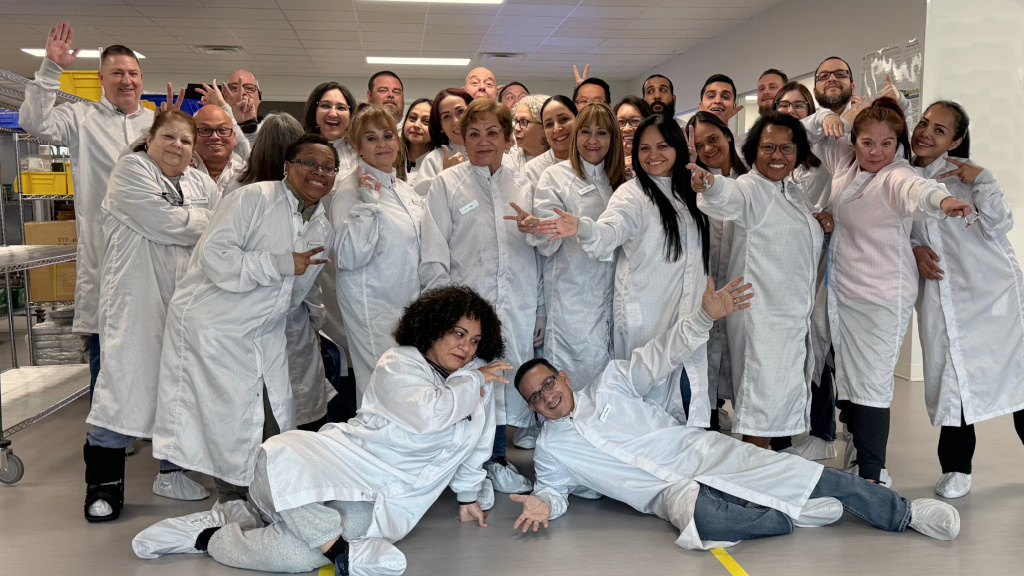
From a backyard startup in 1989 to a global leader in spectroscopy, Ocean Optics continues to help researchers, engineers, and innovators measure what matters. Learn more about our company, our mission, and the technologies we provide today.